
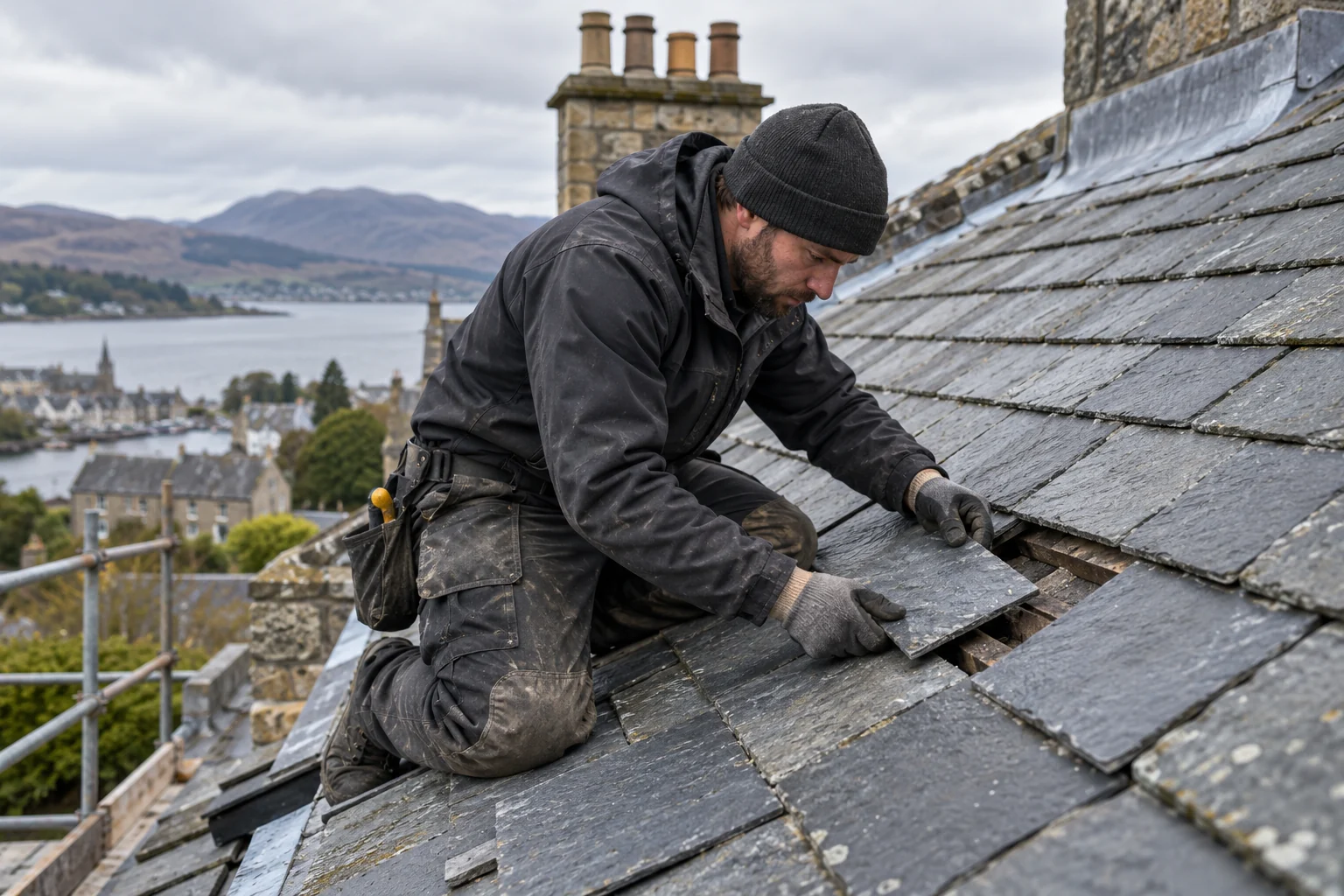
Roofing advice
Roof repair or replacement: how do you decide?
Compare localised roof repairs with full replacement. Learn what to discuss at an inspection and how to assess the proposed scope.
Repair may suit an isolated defect where the surrounding roof remains serviceable. Replacement may be worth discussing when problems are widespread or repairs keep recurring. An inspection is needed to assess the roof and explain the options.
Describe the symptoms without guessing the cause
Note where water appears, when it happens and whether you have noticed loose tiles, slipped slates or damaged roof details. Record previous repairs and whether they resolved the same problem.
The point where a leak appears indoors may not identify where water enters the roof. Explain what you have observed and let the inspection establish the likely cause.
If the problem changes during rain or wind, make a note of the conditions and rooms affected. Keep copies of repair records and any earlier recommendations. A safely taken ground-level photograph may help show where a tile is missing or where water staining appears, but do not climb a ladder or enter an unsafe roof space to collect evidence. The aim is to describe the symptoms, not to diagnose the defect yourself.
If the assessment recommends a larger renewal, our guide to new-roof costs explains the items to compare in a quotation. How much does a new roof cost?
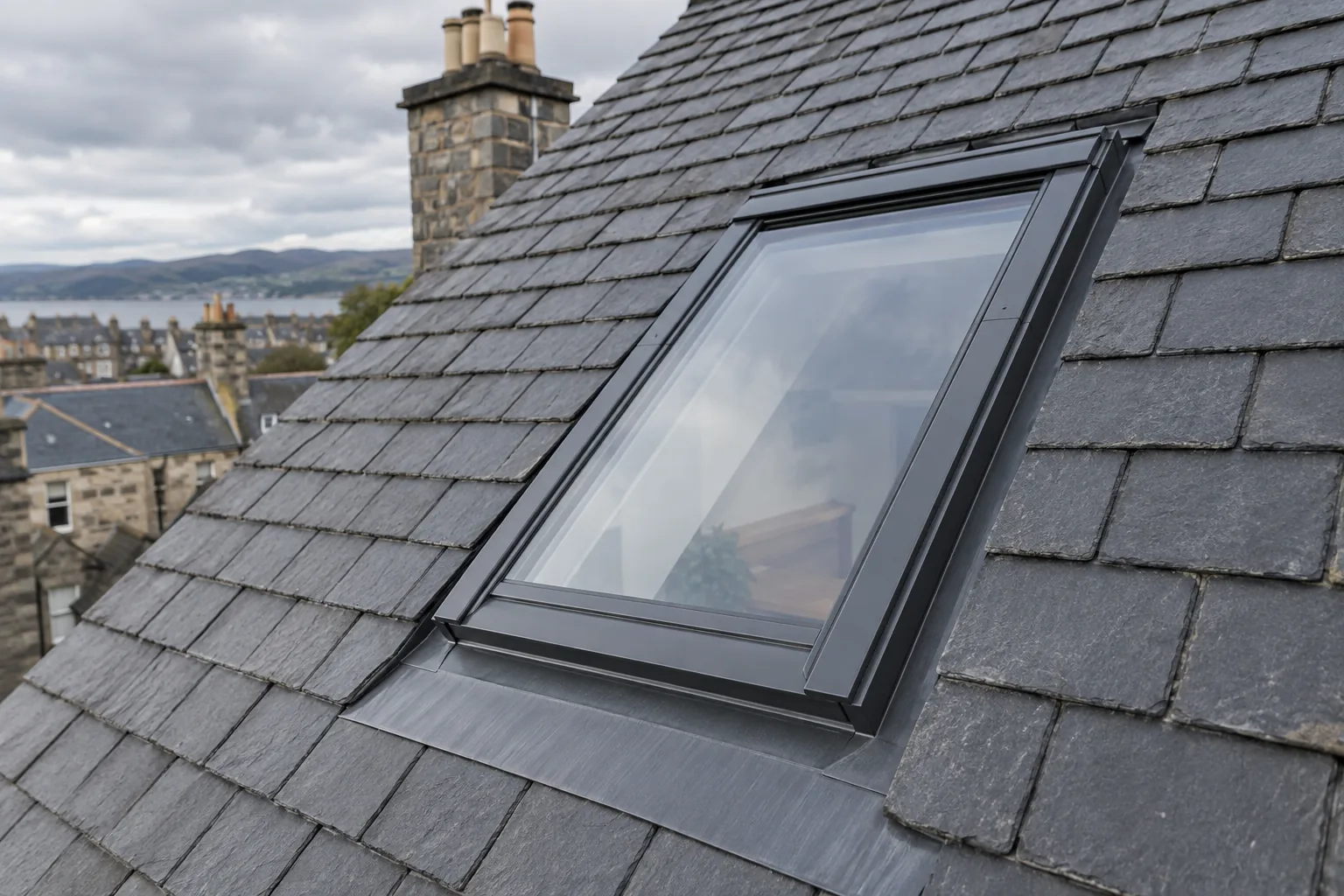
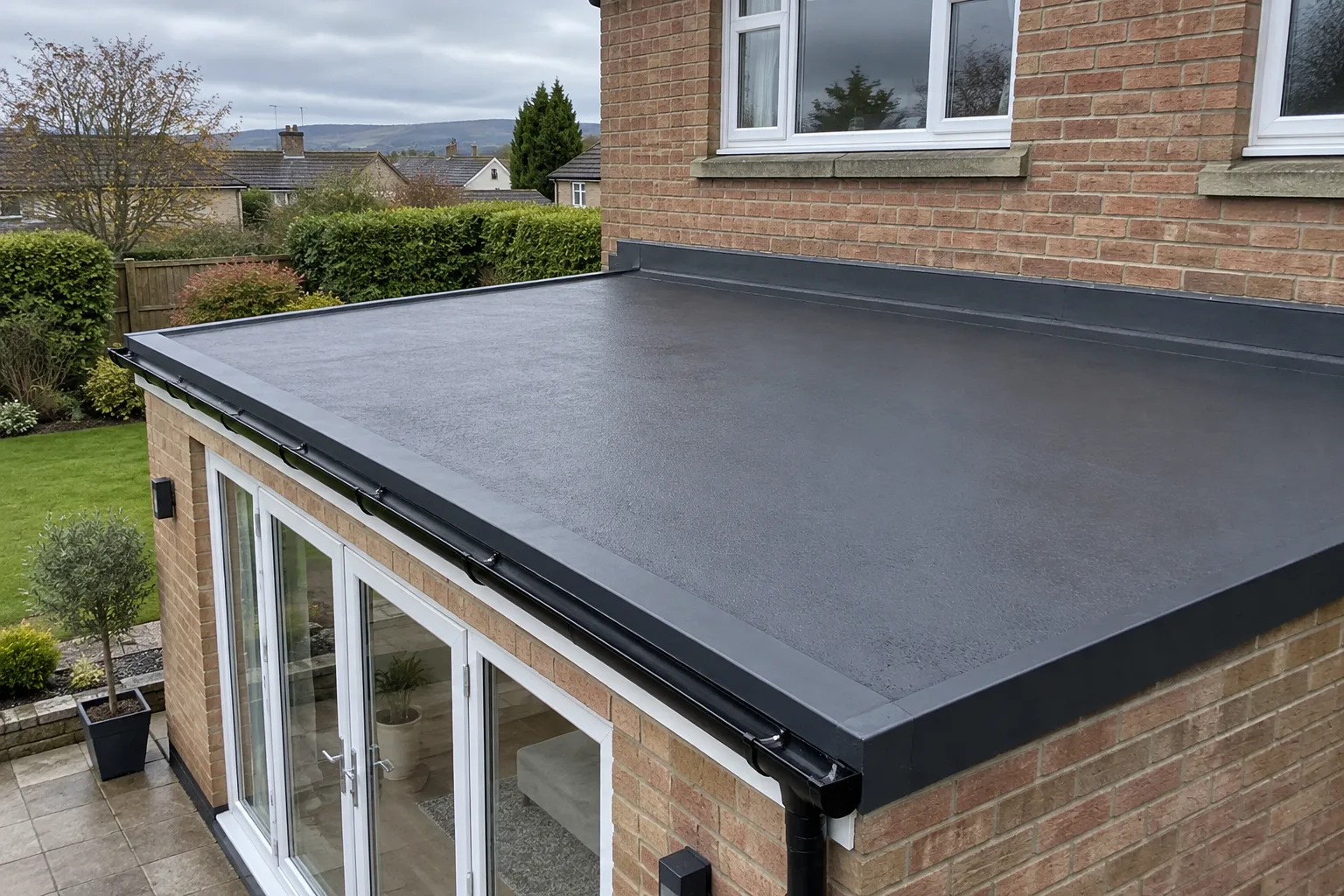
Roofs we fit and repair
See all roof photos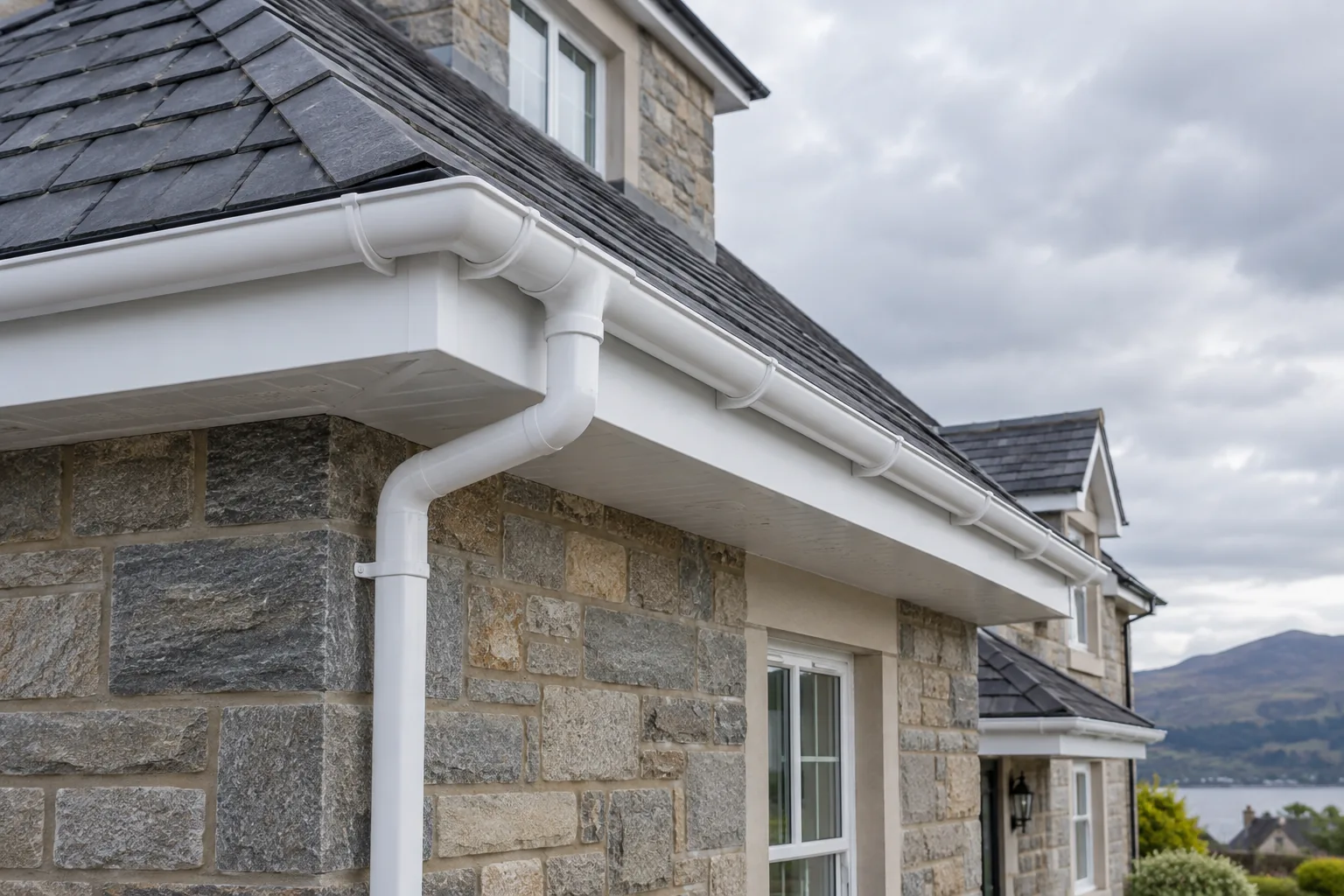

When a local repair is worth exploring
An isolated damaged covering or detail may have a repairable cause. Ask whether the surrounding covering, fixings and adjoining details are in suitable condition to support the proposed repair.
The written recommendation should explain the specific defect, what will be repaired and the limits of the work. A targeted repair should not be described as renewal of the whole roof.
Ask how the new work will tie into the surrounding roof and whether matching materials are available. On older roofs, replacement pieces may differ in colour or size; discuss a practical match before the repair is agreed. The quotation should also say whether access, making good and disposal are included. If the repair can only address one visible detail, ask what related defects remain outside its scope.
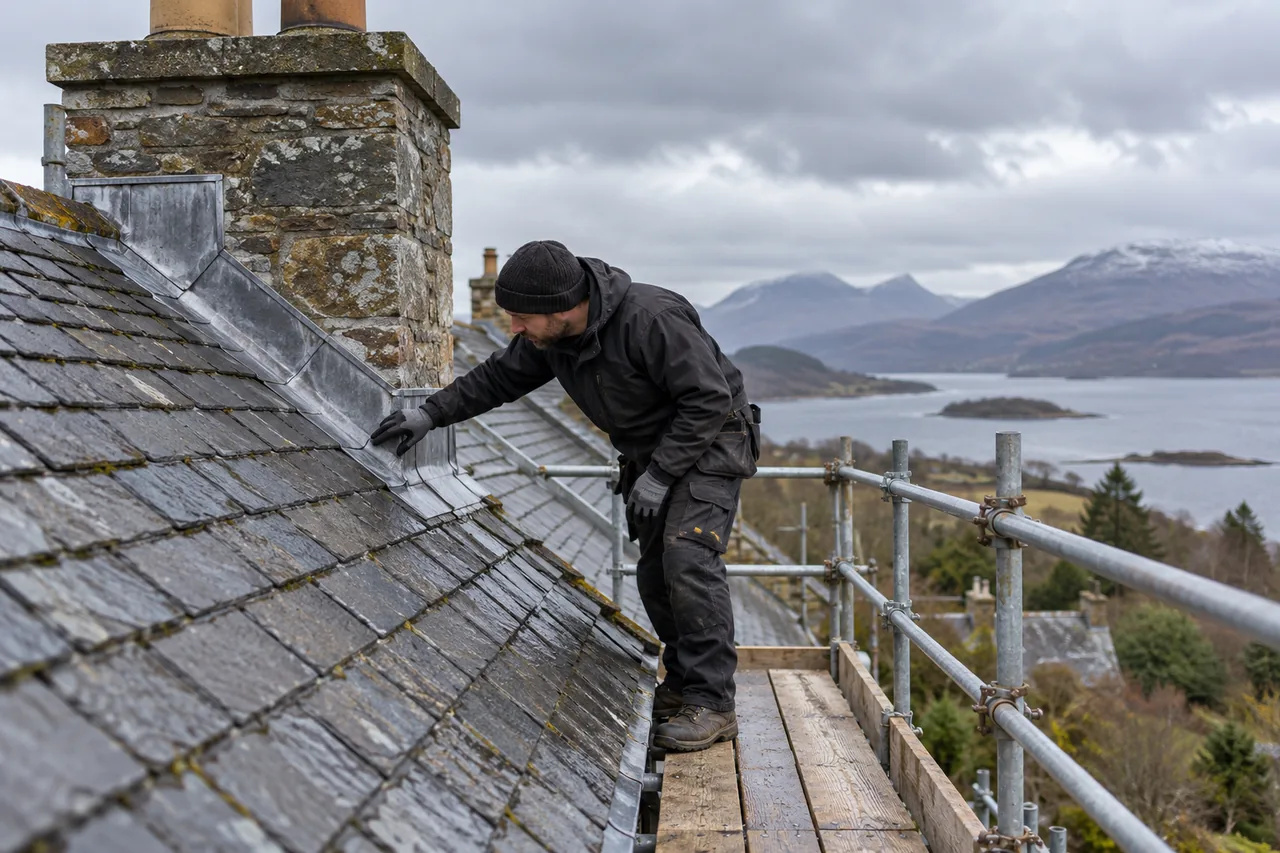
If you decide to explore renewal, use our roof replacement planning checklist before agreeing the work. Roof replacement planning checklist
When to discuss a larger renewal
Repeated problems in several areas, extensive deterioration or defects beneath the covering can change the decision. Ask the surveyor to explain the condition found and why a wider scope is proposed.
Age alone does not establish that a roof needs replacing. Equally, a small visible leak does not prove that only a small repair is required. The condition and construction of the particular roof matter.
A useful assessment separates observations from recommendations. Ask which slopes were inspected, what condition was visible, and whether any part could not be checked safely or without removing materials. Where renewal is suggested, ask which findings make patching unsuitable and which elements might remain. The recommendation should relate to evidence from this property rather than a general claim about how long roofs last.
Ask for the alternatives in writing
Where more than one approach is suitable, compare what each option addresses, what it leaves unchanged, expected disruption and the applicable workmanship or product cover.
Ask how a repair could affect a later replacement. Spending less now can be reasonable if the scope is suitable, but recurring temporary work may not meet your longer-term plans for the property.
For each option, request a description of the work, materials, access, exclusions and payment stages. If a repair is proposed as a temporary measure, ask what signs would indicate that it needs review and whether the cost contributes to a later project. Avoid comparing a narrow repair with a full replacement solely by headline price; they deal with different areas and provide different outcomes.
Include the other people affected
For a shared roof, establish who can arrange access and who needs to agree the scope. Tell the team about tenants, adjoining owners or a managing agent before the appointment.
For a commercial building, explain occupied areas and operational restrictions. Access and sequencing can influence the practical choice even before materials are selected.
In a tenement or other shared property, identify the factor, property manager or owners’ group and find out who can approve an inspection and quotation. Do not assume one resident can authorise work on the whole roof. For rented homes, contact the landlord or responsible agent. Agreeing access and decision-making early can avoid delays after the technical recommendation is ready.
Prepare for an assessment
Have your postcode, a short account of the problem and any previous quotation or repair record ready. Photographs taken from a safe position can help explain the issue, but do not replace a roof assessment.
Call 0800 029 3875 or send the short form: Ultimate Home Solutions replies to enquiries within about an hour, 7 days a week, and books your free roof inspection. If the roof is unsafe, keep people away from the affected area rather than attempting an inspection yourself.
Ask what the visit will cover, who should be present and whether access to a loft or shared area is needed. If water is entering, protect belongings only where it is safe and report any electrical hazard to an appropriate professional. After the visit, review the written findings and ask for any unfamiliar roofing terms to be explained before deciding which option to take.
Ready to talk about your own roof? See our roof repairs service, or call 0800 029 3875 to book a free roof inspection.